
Samsung Refrigerator Not Cooling? Common Problems and Fixes
A Samsung refrigerator that is running but not getting cold can quickly become a serious inconvenience. The cause may be as simple as an incorrect temperature setting or blocked air vent, but it may also involve the evaporator fan, defrost system, compressor, sensors, or electronic controls.
Some basic checks can be performed safely without disassembling the appliance. If the refrigerator remains warm or repeatedly loses temperature, APA Appliance Repair provides professional refrigerator repair throughout Marin County and selected East Bay communities.
Why Is My Samsung Refrigerator Not Cooling?
A refrigerator can lose cooling for several different reasons. First, determine whether the problem affects only the refrigerator compartment or both the refrigerator and freezer.
Refrigerator warm but freezer cold: the problem may involve restricted airflow, frost buildup, an evaporator fan, an air damper, or blocked vents.
Both compartments warm: check the power supply, operating mode, ventilation, fans, compressor, and sealed cooling system.
Temperature changes throughout the day: inspect the doors, gaskets, food arrangement, ventilation, and displayed error codes.
Refrigerator is completely silent: there may be a power, control, wiring, or compressor-related problem.
If an error code appears, take a photograph or write it down before disconnecting power. The code may help identify which system requires diagnosis.
1. Incorrect Temperature Settings or Cooling Off Mode
Begin by checking the temperature settings on the control panel. They may have been changed accidentally while cleaning the refrigerator, loading groceries, or using the dispenser controls.
Some Samsung refrigerators also have a Cooling Off or demonstration mode intended for showroom use. In this mode, the lights and display may work normally while the compressor and cooling system remain disabled. Depending on the model, the display may show an indication such as “OF OF” or “O FF.”
The procedure for disabling this mode varies between models. Consult the owner’s manual for your specific refrigerator instead of pressing several control-panel buttons at random.
After changing the temperature setting, allow the appliance enough time to stabilize. Avoid repeatedly changing the settings because this can make it harder to determine whether the cooling system is operating correctly.
2. The Refrigerator Was Recently Installed or Unplugged
A newly installed refrigerator or an appliance that has been disconnected from power may require several hours to reach its normal operating temperature. Placing a large amount of warm food inside can also temporarily raise the temperature.
During this period:
Keep the doors closed as much as possible.
Make sure the refrigerator has adequate ventilation.
Avoid placing hot cookware directly inside.
Use an appliance thermometer to monitor the actual temperature.
Follow the stabilization time specified in the owner’s manual.
If the refrigerator was previously cooling normally and became warm without being moved or unplugged, another problem is more likely.
3. Air Vents Are Blocked
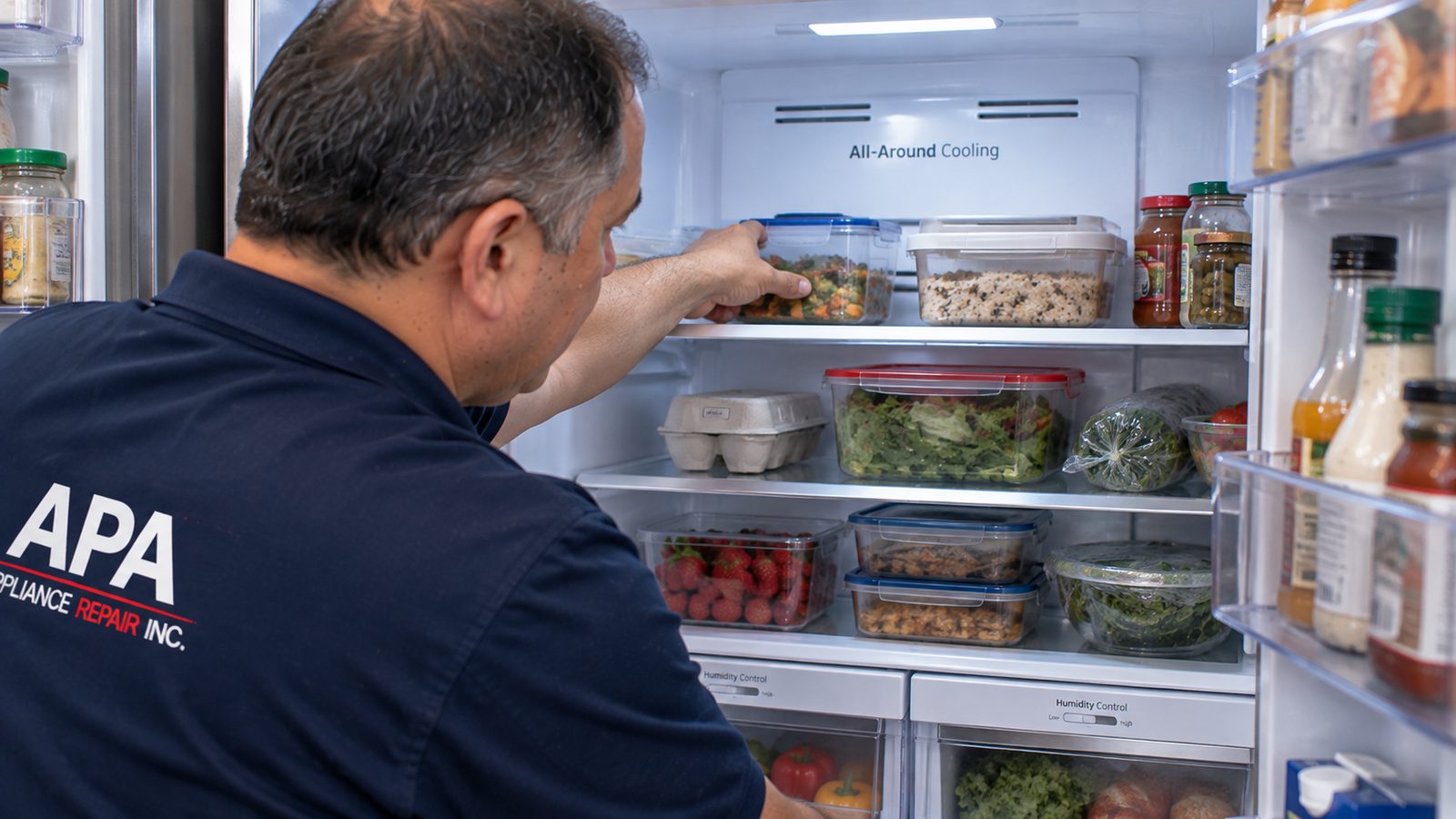
Cold air must circulate throughout the refrigerator and freezer compartments. Food containers placed directly against interior vents can restrict airflow and create warm areas even when the cooling system is operating.
Avoid packing food tightly against the rear wall or surrounding the air vents. Leave enough space for cold air to move between shelves and around stored items.
This is especially important when the freezer remains cold but the refrigerator compartment becomes warm. In that situation, the appliance may be producing cold air but failing to distribute it properly.
4. The Refrigerator Door Is Not Closing Correctly
Warm room air enters whenever a refrigerator door does not seal properly. The cooling system may run for long periods without reaching the selected temperature, while condensation or frost develops inside the appliance.
Check for:
Food containers preventing the door from closing
Dirty, folded, loose, or damaged door gaskets
A drawer or shelf that is not fully seated
A refrigerator that is not level
A door that was left slightly open
Damage around a hinge
Visible door misalignment
Clean the gasket with mild soap and water, then dry it thoroughly. Do not apply glue, petroleum products, or strong household chemicals to the seal.
If the gasket is torn or the door is visibly misaligned, it may require professional adjustment or replacement.
5. Poor Ventilation or Dust Around the Refrigerator
A refrigerator must release heat into the surrounding room. Dust around an accessible condenser area or insufficient clearance around the appliance can reduce cooling efficiency.
Unplug the refrigerator before cleaning accessible exterior ventilation areas. Use a soft brush or vacuum only where permitted by the owner’s manual. Do not remove secured service panels or reach near electrical components.
Some modern refrigerators do not provide user access to the condenser coils. If cooling components are located behind a secured panel, leave the inspection to a technician.
6. Frost Buildup Is Restricting Airflow
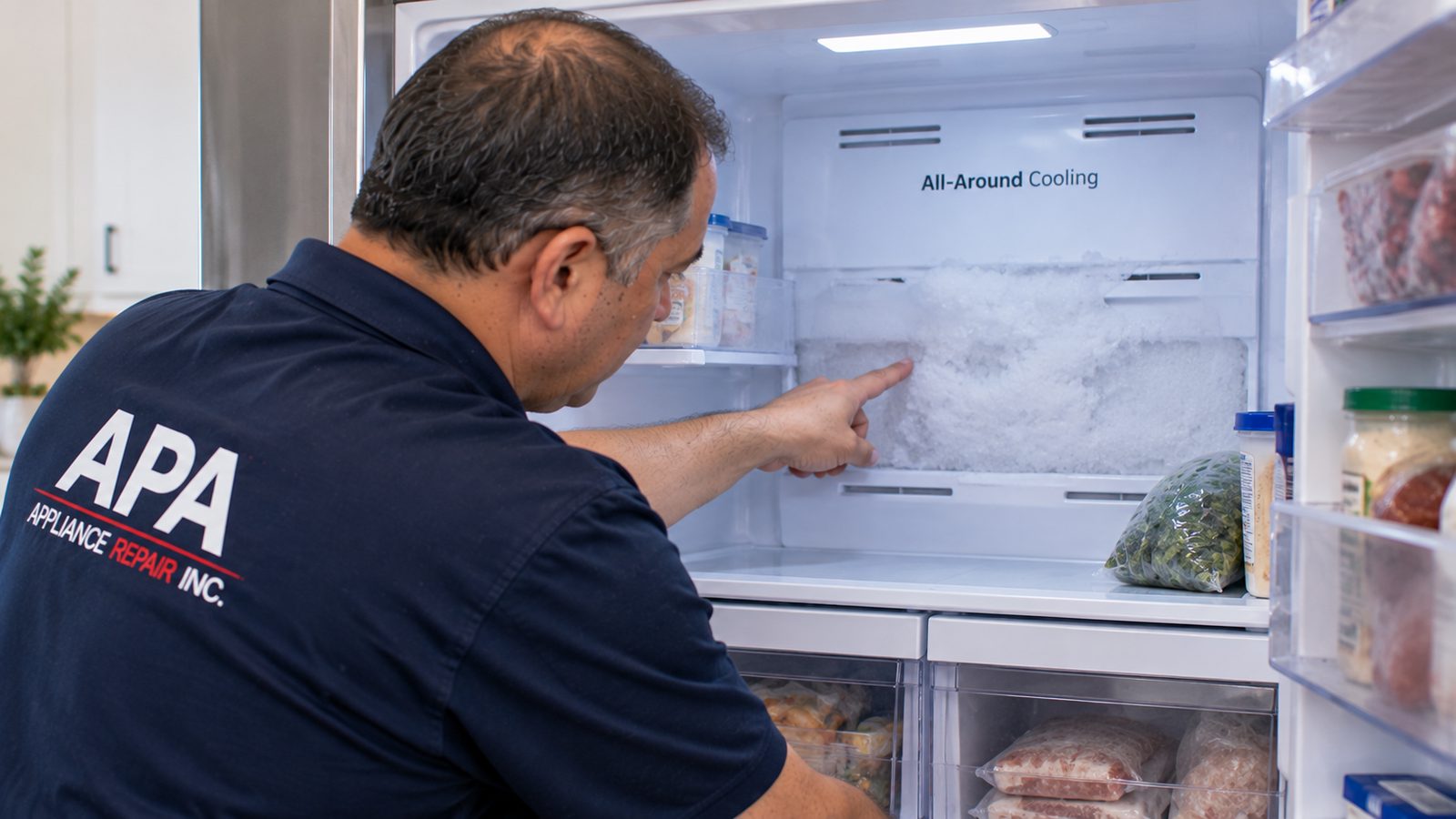
A layer of frost on the rear interior panel of the freezer can indicate that cold air is no longer circulating normally. The visible frost may be caused by a door left open, an air leak, or a problem with the automatic defrost system.
Defrost-system problems may involve:
The defrost heater
A temperature sensor or thermistor
A thermal fuse or safety device
Wiring connections
The electronic control board
As ice continues to accumulate, it may block the evaporator coil and restrict airflow to the refrigerator compartment. This commonly results in a cold freezer and a warm fresh-food section.
Do not break the ice with a knife, screwdriver, or other sharp object. Do not use a heat gun, space heater, or open flame. These methods can puncture refrigerant tubing, damage plastic panels, or create an electrical and fire hazard.
7. The Evaporator Fan Is Not Working
The evaporator fan moves cold air from the evaporator area through the refrigerator and freezer compartments. If the fan is blocked by ice, damaged, or electrically defective, the freezer may remain partially cold while the refrigerator compartment becomes too warm.
Possible signs of an evaporator fan problem include:
No noticeable airflow from the interior vents
Buzzing, squealing, or scraping noises
Noise that changes when a door is opened
A cold freezer combined with a warm refrigerator compartment
Frost near the fan or rear freezer panel
Do not remove the freezer’s interior panel while the refrigerator is connected to power. The fan, heater, wiring, and evaporator coil are located behind this panel and can be damaged by improper handling.
8. The Condenser Fan Is Blocked or Defective
On models equipped with a condenser fan, it helps remove heat from the condenser and compressor area. If the fan cannot rotate normally, the refrigerator may cool poorly, run continuously, or become unusually hot around the lower rear section.
Dust, debris, or a failed fan motor can cause this problem. Because the fan is located near electrical and mechanical components, internal inspection is generally best left to a qualified technician.
9. A Temperature Sensor Is Providing Incorrect Information
Samsung refrigerators use temperature sensors to monitor conditions in different compartments. If a sensor or its wiring provides inaccurate readings, the control board may operate the fans, compressor, or defrost system incorrectly.
A sensor problem can cause:
Intermittent cooling
Incorrect compartment temperatures
Excessive compressor operation
Unexpected defrost cycles
Recurring temperature-related error codes
Testing usually requires model-specific measurements and access to internal wiring. Replacing a sensor based only on the visible symptom is not recommended because airflow restrictions, ice buildup, and control problems can produce similar behavior.
10. The Compressor or Sealed System Has a Problem
If both the refrigerator and freezer are warm despite correct settings and operating fans, the problem may involve the compressor, inverter system, refrigerant circuit, or another sealed-system component.
Warning signs may include:
The compressor attempts to start and repeatedly stops.
A clicking sound comes from the lower rear area.
The compressor runs, but little or no cooling is produced.
Both compartments gradually lose cooling.
An inverter or compressor-related error code appears.
The refrigerator runs continuously without reaching the selected temperature.
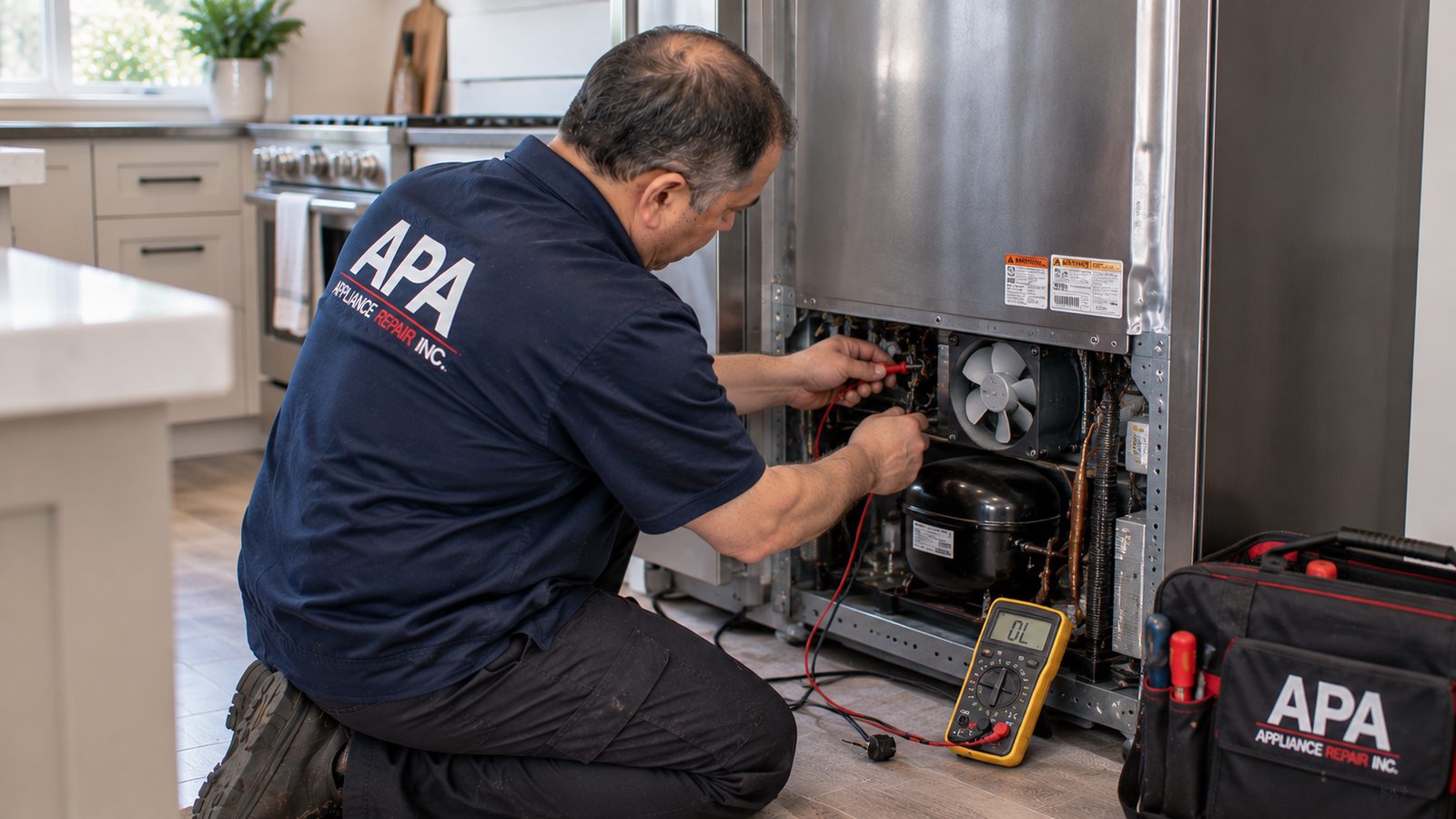
Sealed-system work requires specialized tools and training. Refrigerant lines should never be cut, heated, punctured, or opened as a do-it-yourself repair.
What Can You Safely Check at Home?
Before requesting repair, you can perform the following non-invasive checks:
Confirm that the refrigerator is connected to power.
Check whether the interior lights and control panel work.
Review the selected refrigerator and freezer temperatures.
Make sure Cooling Off or demonstration mode is not active.
Photograph any displayed error codes.
Move food away from the interior air vents.
Check that both doors close completely.
Inspect and gently clean the door gaskets.
Look for frost on the rear interior freezer panel.
Listen for clicking, grinding, buzzing, or scraping.
Check accessible exterior ventilation areas for dust.
Measure the actual temperature with an appliance thermometer.
Avoid repeatedly unplugging or resetting the refrigerator. A reset may temporarily remove an error from the display without correcting the underlying problem. Always record the error code before disconnecting power.
Protecting Food When the Refrigerator Is Warm
Keep the refrigerator and freezer doors closed as much as possible. Move perishable food to another properly operating refrigerator or a suitable cooler if the appliance cannot maintain a safe temperature.
Do not taste food to determine whether it is safe. If you are uncertain how long perishable food has been stored above a safe temperature, follow current food-safety recommendations and discard questionable items.
When Should You Call for Samsung Refrigerator Repair?
Professional diagnosis is recommended when:
The refrigerator remains warm after settings and airflow have been checked.
The freezer is cold, but the refrigerator compartment is warm.
Frost repeatedly returns to the rear freezer panel.
A fan makes unusual noises or does not appear to operate.
The refrigerator displays a recurring error code.
The compressor repeatedly clicks or attempts to start.
Both compartments are losing cooling.
Water is leaking from or underneath the appliance.
Internal panels or electrical components must be accessed.
The refrigerator trips a breaker or produces a burning smell.
If you notice smoke, sparking, a burning odor, or repeated breaker trips, disconnect the appliance if it is safe to do so and stop using it. If a water supply line is leaking, close the refrigerator’s water shutoff valve.
Is a Samsung Refrigerator Worth Repairing?
Many cooling problems can be repaired without replacing the entire refrigerator. Fan motors, sensors, defrost components, door gaskets, and some control components may be replaceable individually.
The decision should consider:
The refrigerator’s age and overall condition
The exact failed component
The cost and availability of replacement parts
Previous repairs
The condition of the compressor and sealed system
The cost of a comparable replacement refrigerator
A professional diagnosis is important before making this decision. A warm refrigerator compartment does not automatically mean that the compressor has failed.
Samsung Refrigerator Repair in Marin County and the East Bay
APA Appliance Repair provides independent Samsung appliance repair for many common refrigerator problems, including insufficient cooling, frost buildup, fan failures, temperature-control problems, unusual noises, and ice-maker issues.
We serve Marin County and selected East Bay communities. Visit our service area page to confirm whether appointments are currently available in your city.
When scheduling service, provide the refrigerator’s model number, any displayed error code, and a brief description of which compartment is not cooling. This information can help make the diagnostic visit more efficient.
Frequently Asked Questions
Why is my Samsung freezer cold but the refrigerator is warm?
This usually indicates an airflow problem between the freezer and refrigerator compartments. Possible causes include blocked vents, frost buildup, a failed evaporator fan, an air-damper problem, or a temperature-sensor fault.
Why is there frost on the back panel of my Samsung freezer?
Visible frost may result from a door being left open, a damaged gasket, restricted airflow, or a failure in the automatic defrost system. If the frost returns after the appliance has been properly defrosted, professional diagnosis is recommended.
Should I reset my Samsung refrigerator?
A power reset may clear a temporary electronic error, but it will not repair a failed fan, blocked airflow path, defective defrost component, or sealed-system problem. Photograph any error code before disconnecting power and follow the instructions for your specific model.
Can I remove ice with a hair dryer or sharp tool?
No. Excessive heat can deform interior panels and damage wiring, while sharp tools can puncture refrigerant tubing. Use only the defrost procedure described in the owner’s manual or request professional service.
Why is my Samsung refrigerator running but not getting cold?
The appliance may have blocked airflow, an inoperative fan, heavy frost buildup, incorrect sensor readings, poor condenser ventilation, a compressor problem, or a sealed-system fault. Testing is required to distinguish between these causes.
Schedule Samsung Refrigerator Service
If your Samsung refrigerator is not cooling, avoid replacing parts based only on the visible symptom. APA Appliance Repair can inspect the airflow system, fans, defrost components, sensors, controls, compressor, and other cooling-system components.
Schedule a refrigerator repair appointment or call (415) 237-9464.
You may also find our general guide helpful: Refrigerator Not Cooling? Common Causes and Troubleshooting Tips.
Samsung is a trademark of its respective owner. APA Appliance Repair inc. is an independent appliance service provider and is not affiliated with or endorsed by Samsung.