
An ice maker that stops making ice does not always need to be replaced. A switched-off setting, warm freezer, restricted water supply, or incorrectly installed filter can interrupt production. A frozen fill tube or a component fault may also be involved.
Start by checking whether the ice bin is empty. If it already contains ice but nothing comes through the door dispenser, the problem may be with dispensing rather than ice production.
This guide covers ice makers built into residential refrigerators. Countertop ice machines and standalone undercounter units use different systems and require their own troubleshooting instructions.
What to Check First When Your Ice Maker Stops Working
Before removing anything, check the basics:
Confirm that ice production is enabled using your refrigerator’s controls.
Check that the freezer door and any separate ice-compartment door close completely.
Look for packages blocking the ice bin or visible air vents.
Confirm that the refrigerator’s water supply is on, if the valve is safely accessible.
Note whether the problem followed a filter change, installation, power interruption, or heavy ice use.
Do not reach into the ice maker, auger, or dispenser chute while the appliance has power. Follow the manual before removing a user-accessible bin or filter. If you find an active water leak, turn off the ice maker and close its water-supply valve if safe to do so. Do not touch wet electrical connections.
What the Symptoms May Tell You
The bin is empty: Check settings, temperature, and water delivery before assuming the ice maker assembly has failed.
Ice is being made, but slowly: Recent heavy use, temperature changes, or restricted water flow may explain the shortage.
Cubes are unusually small or hollow: The mold may be receiving too little water.
The bin contains ice, but the dispenser does not work: Check for a dispensing problem.
One of two ice makers works: Record which one has stopped; the two systems may have separate settings or components.
Ice stopped after a filter replacement: Recheck the cartridge type and installation.
1. The Ice Maker Is Off or the Bin Shutoff Is Blocked
Refrigerators may control ice production through a display setting, a switch, a wire arm, or an electronic bin sensor. On some models, a raised arm means production is paused.
A package or pile of ice can interfere with the shutoff mechanism. A bin that is not seated correctly can also affect operation on certain models.
What you can do: Use the owner’s manual to identify the correct on/off setting. Check that the bin is installed as instructed and that nearby food packages are not obstructing it.
Do not bend the arm, force a paddle, or tape over a sensor. If a mechanism is broken or remains stuck after an obvious obstruction is removed safely, arrange service.
2. The Freezer or Ice Compartment Is Too Warm
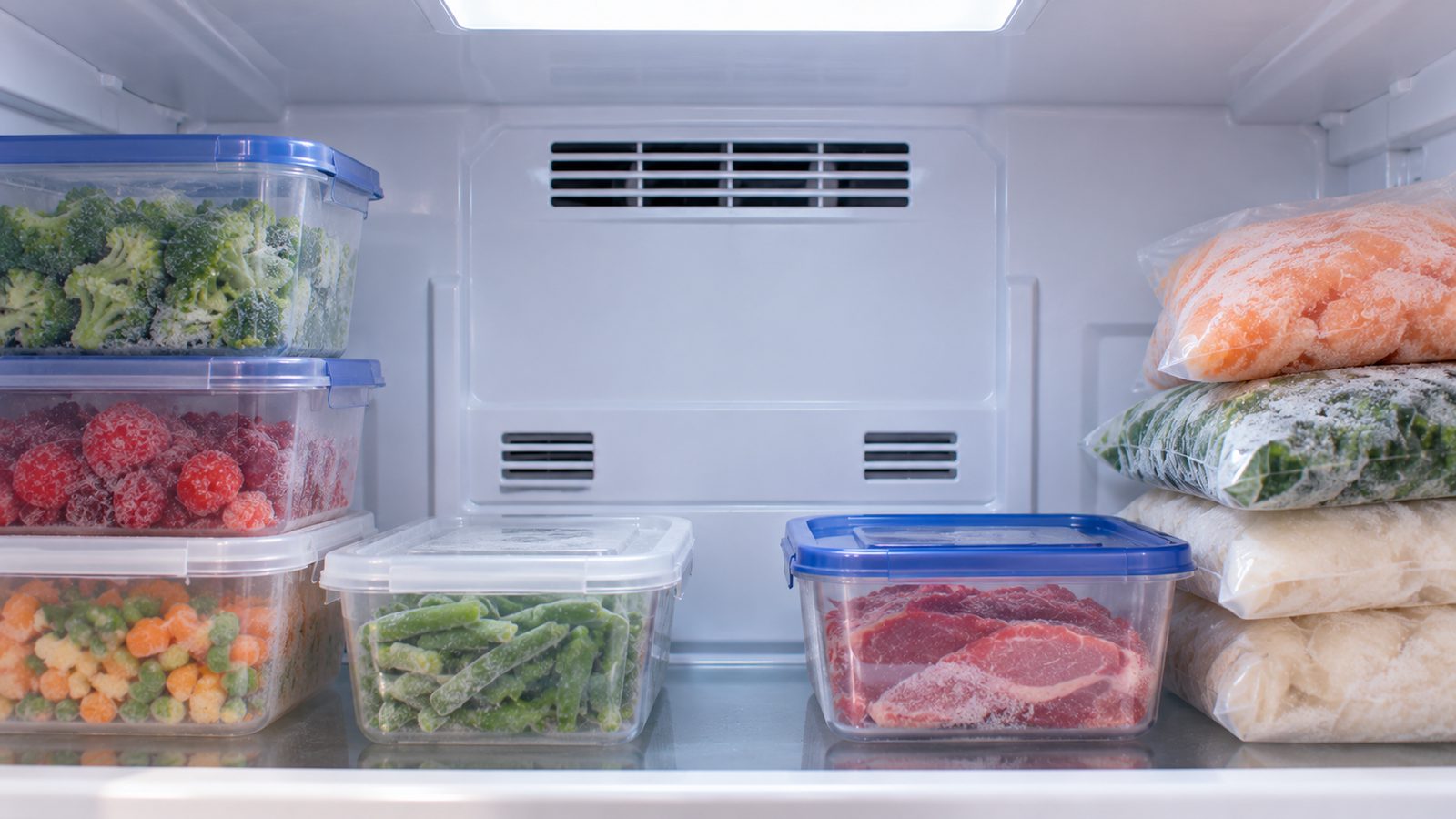
An ice maker needs sufficiently cold conditions to freeze water and complete its cycle. Food that still feels frozen does not prove that the ice-making compartment is reaching the required temperature.
Around 0°F (-18°C) is a common freezer setting, but follow the recommendation for your particular refrigerator. Some ice-making systems call for different settings.
What you can do: Check the actual freezer temperature with an appliance thermometer. Make sure packages are clear of air vents and that doors close firmly. If your model has a separate ice compartment, check that its door or bucket is fully seated.
Avoid repeatedly lowering the setting without allowing the appliance time to stabilize. If cooling is also deteriorating, read Refrigerator Not Cooling? 7 Common Causes & What to Do. A cooling fault should be addressed before replacing ice maker parts.
3. The Refrigerator Needs Time to Start or Replenish Ice
A newly installed refrigerator must cool down before normal ice production begins. Depending on the model and conditions, the first batch may take roughly 12–48 hours, and filling the bin can take longer.
Frequent door opening and a large amount of newly added food can also affect recovery.
What you can do: Check the manufacturer’s startup and production guidance. Keep the doors closed as much as practical, confirm water is connected, and allow the specified recovery period.
If the recommended waiting period has passed without any ice, continue with the water-supply checks.
4. Water Flow Is Restricted
A closed supply valve, kinked tubing, or insufficient water pressure can prevent the ice maker from receiving enough water. A restriction may first appear as smaller cubes or slower production.
What you can do: Check that the dedicated supply valve is open, provided it is accessible and there is no active leak. Look for a visibly pinched section of tubing without pulling out a heavy or built-in refrigerator.
Do not disconnect a pressurized line or force a stuck valve. Pressure requirements vary by model, so avoid using a single pressure figure as a rule for every refrigerator.
If the household supply needs testing or repair, a plumber may be appropriate. Problems with the refrigerator’s own water valve or internal tubing require appliance diagnosis.
5. The Water Filter Is Clogged or Incorrectly Installed
A restricted filter can reduce the water reaching the ice maker. A replacement cartridge that does not fit the model or is not seated correctly can also reduce or stop flow.
What you can do: Confirm the correct filter part number and follow the installation instructions. Replace an overdue or restricted filter using the manufacturer’s recommended cartridge and interval. Many refrigerator filters have a six-month guideline, but water quality and usage can affect replacement needs.
After installation, flush the system as directed for your model. Do not assume the refrigerator can operate without a filter: some models require a bypass plug.
6. The Fill Tube Is Frozen or the Inlet Valve Is Faulty
The fill tube carries water into the ice maker. If it freezes, water cannot reach the mold even when the refrigerator’s dispenser still works.
A faulty inlet valve may also interrupt filling. On some refrigerators, the ice maker and water dispenser use separate valve outlets, so one can work while the other does not.
What you can do: Note whether the dispenser works and whether ice repeatedly accumulates near the fill area. Share those observations when requesting service.
Do not use a hair dryer, heat gun, sharp tool, or boiling water to clear an internal blockage. Do not remove the ice maker to reach concealed tubing. A recurring freeze-up needs diagnosis rather than repeated thawing.
7. A Sensor, Motor, Fan, or Control Has Failed
If settings, temperature, water supply, and filter installation are correct, the remaining problem may involve the ice-making mechanism or its controls.
Depending on the design, a temperature sensor, motor, dedicated ice-compartment fan, wiring connection, or control fault can interrupt the cycle.
What you can do: Photograph any error code and record whether you hear repeated clicking, unusual grinding, or normal cycles without new ice.
Do not force the tray, bypass a door switch, or test electrical components yourself. A technician can determine which part of the cycle is failing before recommending replacement components.
Ice Is in the Bin, but the Dispenser Is Not Working
Ice production and dispensing are separate functions. A full bin with no ice reaching your glass may involve clumped cubes, an improperly installed bucket, a blocked chute, a dispenser lock, or a drive-system fault.
What you can do: Check the dispenser-lock setting and make sure the doors are closed. If the manual allows bin removal, follow its shutdown and removal instructions before handling clumped ice.
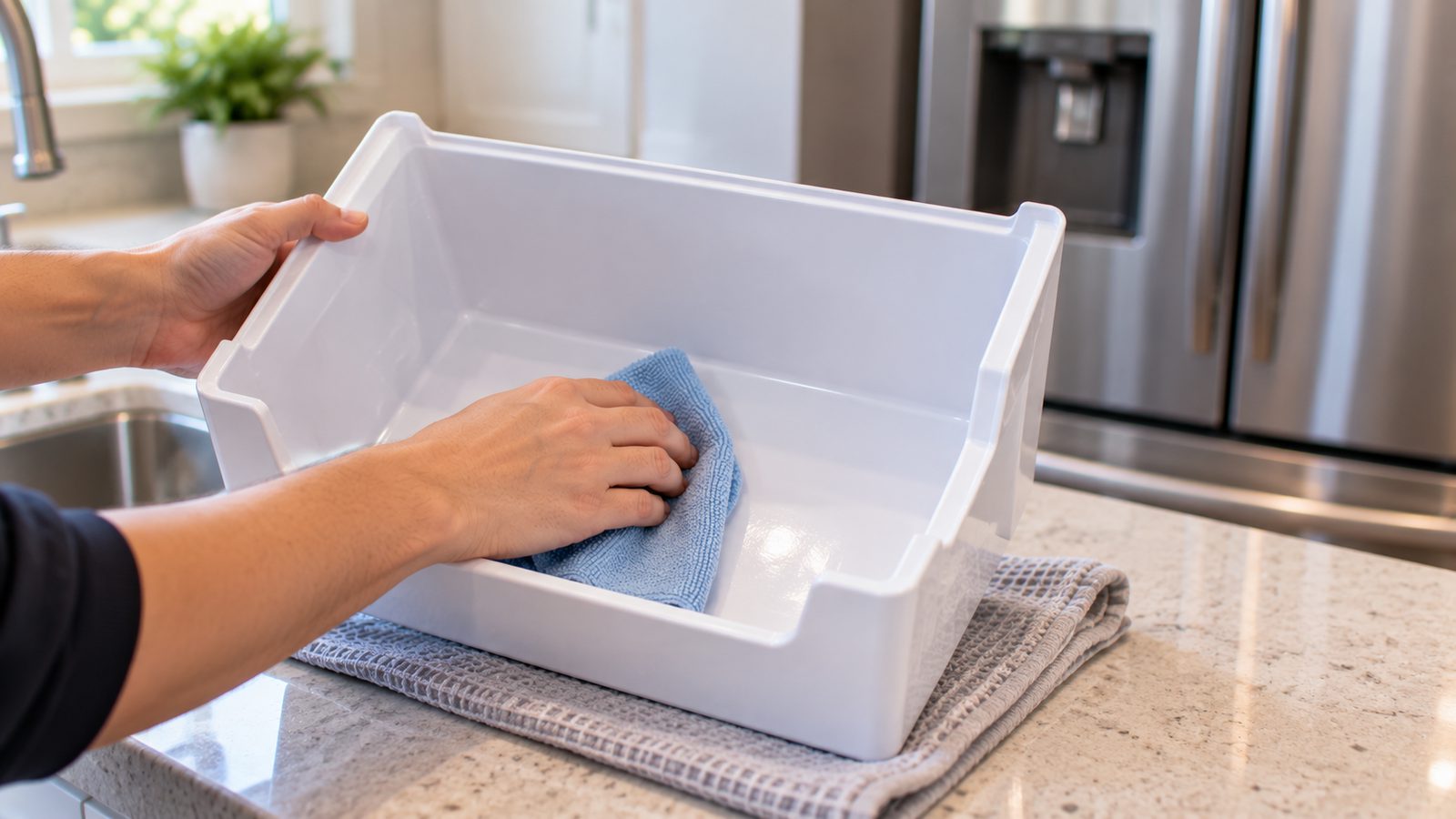
Clean and dry the removable bin only as directed; do not immerse electrical parts. If the bucket is frozen in place, do not force it out.
Keep fingers and tools away from the auger and chute. Persistent jamming, grinding, or failure to dispense after the bin is correctly reinstalled needs further diagnosis.
Should You Reset the Ice Maker?
A manufacturer-approved reset may help after a temporary interruption, but there is no universal reset procedure. Different models use different buttons, settings, and waiting periods.
Check the manual for your exact model before starting. If the procedure requires disconnecting power, use only a dry, safely accessible plug or the appropriate safe isolation method. Keep hands clear because a test cycle may move the mechanism or release water and ice.
Allow the recommended observation period afterward. Repeated resets will not correct a blocked water supply, failed component, or cooling problem. If the same fault returns, arrange service.
When to Call an Ice Maker Repair Technician
Request ice maker repair if the bin remains empty after the recommended checks and waiting period, the fill tube repeatedly freezes, the tray will not release ice, or an error code returns.
Provide the refrigerator brand, model number, affected ice maker location, and whether the water dispenser still works. Include details of any recent filter change or installation.
Frequently Asked Questions
Why does my water dispenser work, but my ice maker does not?
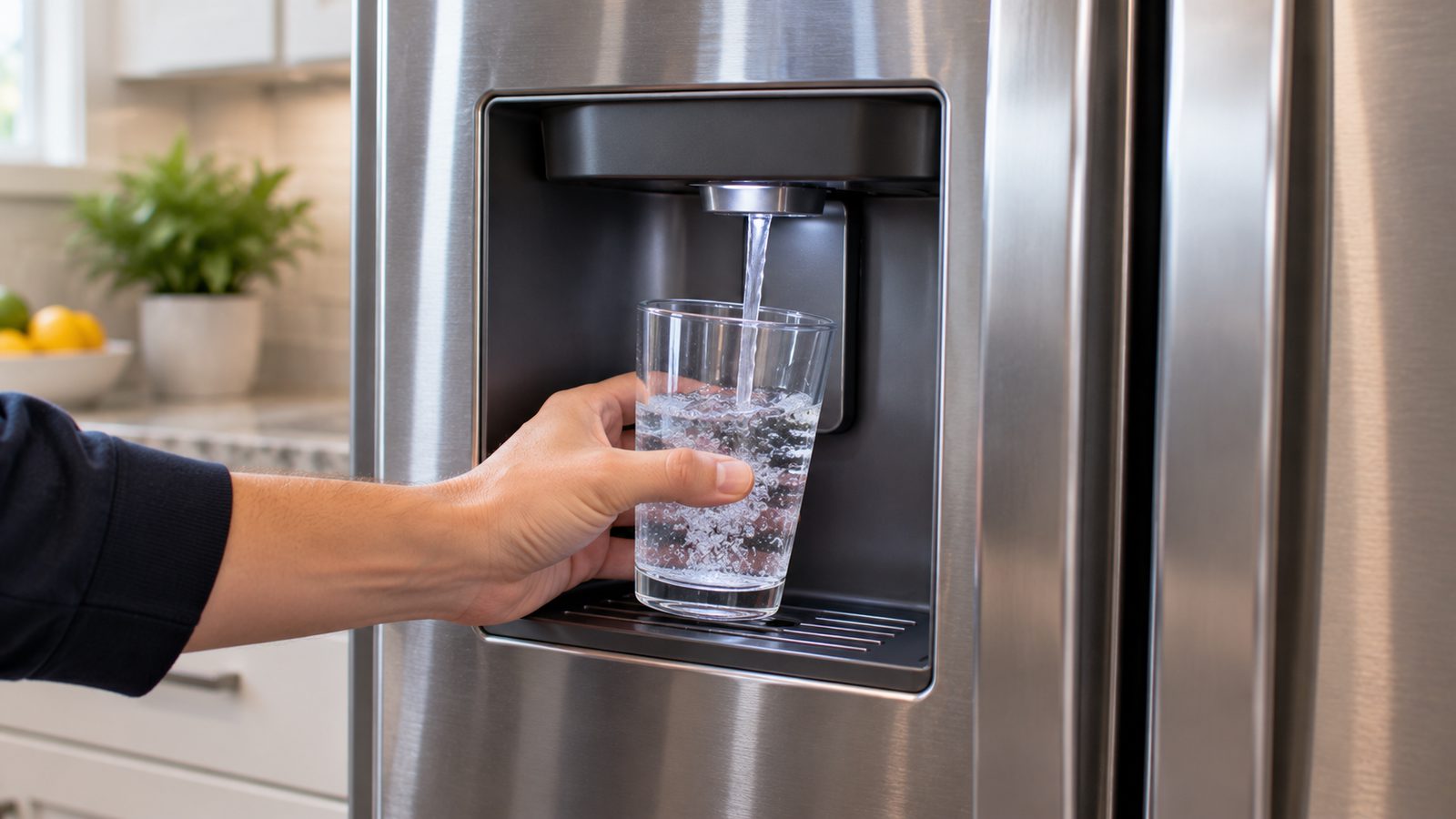
The ice maker has additional requirements, including the correct temperature and a functioning fill and harvest cycle. Its fill tube or valve outlet may be blocked or faulty even when water still reaches the dispenser.
Why is my ice maker making only small or hollow cubes?
Restricted water flow is one possible cause. Check the filter and accessible supply valve, and have persistent problems evaluated rather than changing internal fill adjustments.
How long should I wait after installing a refrigerator?
Follow the model’s instructions. Some refrigerators need roughly 12–48 hours for the first ice, and a full bin may take longer. Continued lack of production after the specified startup period warrants further checks.
Does an ice maker problem mean I need a new refrigerator?
Not necessarily. A settings, filter, water-supply, or replaceable-component problem may be repairable. The decision depends on diagnosis, the refrigerator’s overall condition, parts availability, and repair cost.
Schedule Refrigerator Ice Maker Repair
APA Appliance Repair provides in-home service for many refrigerator ice maker systems throughout Marin County and selected East Bay communities. We do not currently service San Francisco city or Peninsula addresses.
Call (415) 237-9464 or use the online service request form. Include your complete address, refrigerator brand, model number if available, and a description of the ice maker problem. Appointments are available Monday through Saturday, from 9:00 AM to 5:00 PM. Contact us to confirm availability for your address and preferred visit time.