
Water beneath your refrigerator does not always mean a major component has failed. A blocked defrost drain, a poorly seated water filter, a leaking supply connection, or excess condensation can all leave similar puddles.
The location and timing of the water provide useful clues, but they do not confirm a diagnosis. Water can travel along shelves, tubing, and the floor before it becomes visible. Start with the safe checks below, and stop if finding the source would require removing panels or moving a heavy appliance.
What to Do First When Your Refrigerator Is Leaking
Before investigating the cause:
Stop using the water dispenser and turn off the ice maker.
If you suspect a water-supply leak, close the refrigerator’s dedicated water shutoff valve if it is safely accessible. Do not force a stuck valve.
Before cleaning or inspecting accessible parts, disconnect power only if the plug and surrounding area are dry and safely reachable.
If water is near the outlet, cord, or electrical components, do not touch the appliance or step into the wet area. Have power isolated safely before proceeding.
Once the area is safe, dry the floor and note where the water returns.
Unplugging the refrigerator does not necessarily stop a leak from a pressurized water line. Do not pull out a built-in refrigerator or move a heavy unit alone.
Where Is the Water Appearing?
Use these clues to narrow down the possibilities:
Under the crisper drawers: A drainage problem, leaking internal reservoir, or filter connection may be involved.
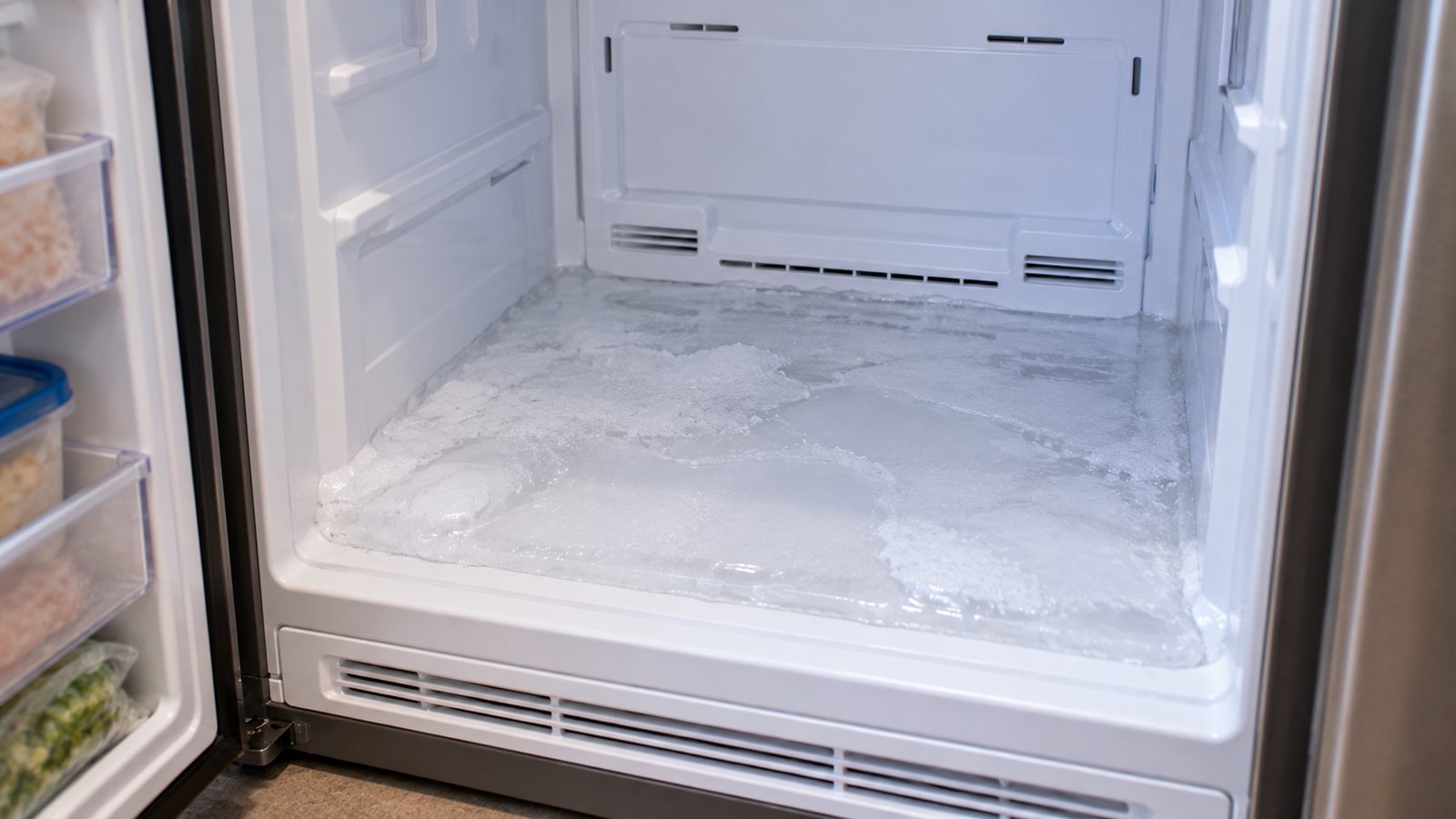
On the freezer floor: Ice buildup followed by water escaping can point to a blocked defrost drain.
Behind the refrigerator: The household supply line, a connection, or the appliance’s inlet valve may be leaking.
Near the filter after replacement: Check filter compatibility, seating, and visible seals.
Around the doors or on shelves: Look for spilled containers, moisture, and a door that is not closing properly.
At the dispenser: Brief drips after dispensing differ from persistent dripping when nobody is using it.
These are starting points, not proof that a particular part needs replacement.
1. A Clogged or Frozen Defrost Drain
During an automatic defrost cycle, melting frost normally drains into a collection pan beneath the refrigerator. If the drain becomes blocked or freezes, water may collect inside the cabinet or freeze on the bottom of the freezer.
A recurring sheet of ice beneath the freezer basket is a useful warning sign. Depending on the refrigerator’s design, water may eventually escape onto the floor.
What you can do: Check the owner’s manual for any model-specific, user-accessible drain-cleaning procedure. Remove only loose debris from an exposed area that the manual identifies as safe to clean.
Do not chip ice with a knife, pour boiling water into the appliance, use a hair dryer inside it, or remove an evaporator cover. If the drain is hidden or the blockage returns, arrange service to identify why it is freezing or backing up.
2. A Water Filter That Is Loose, Damaged, or Incorrect
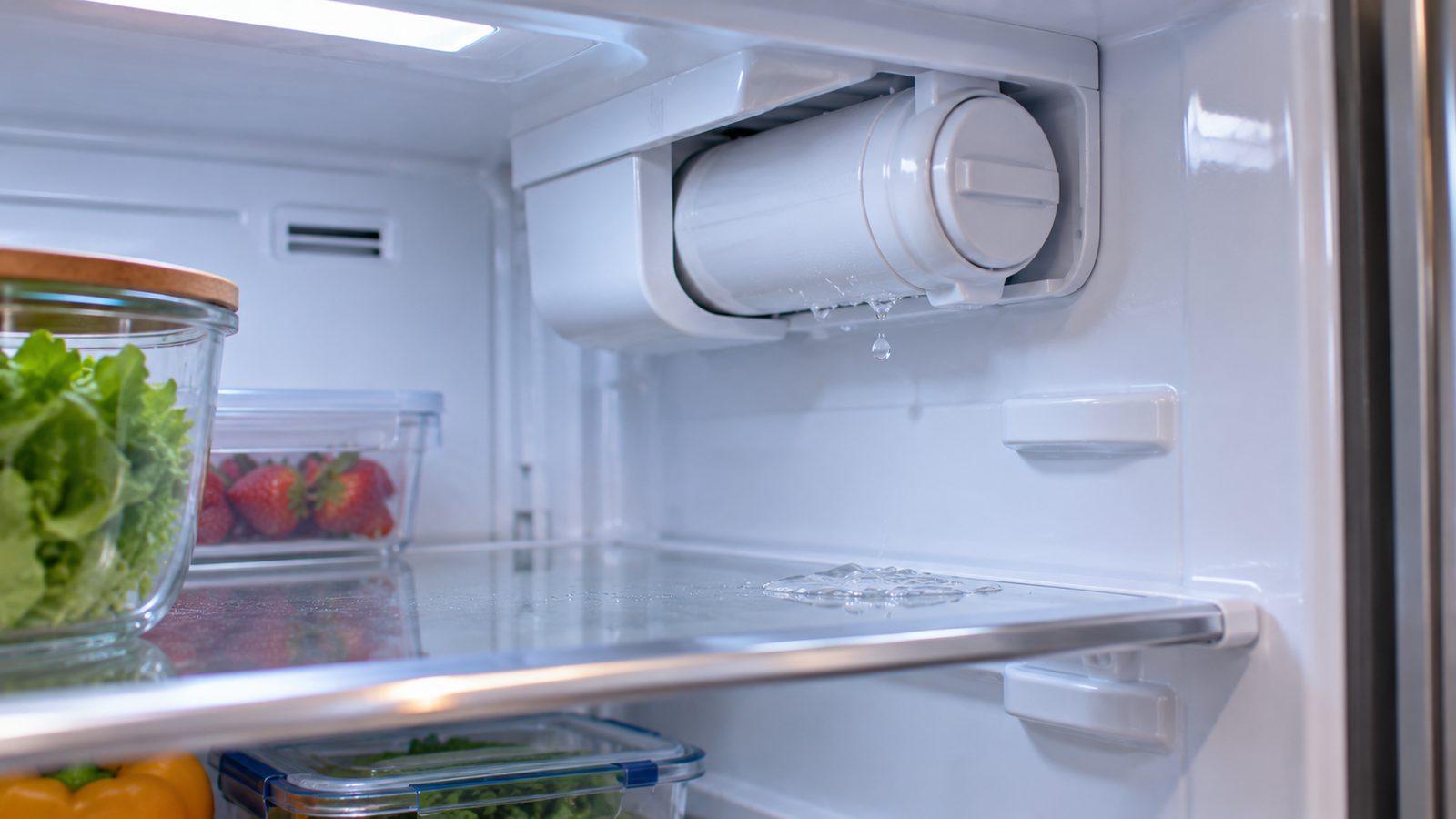
A leak that begins shortly after a filter change makes the filter and its connection worth checking. An incompatible cartridge, incorrect installation, damaged seal, or cracked housing can allow water to escape.
What you can do: Follow the manufacturer’s instructions for removing and reinstalling the filter. Confirm that the replacement is specified for your model and that any visible seals are intact. Do not force the cartridge or tighten it beyond the prescribed position.
After installation, follow the model’s flushing instructions. Trapped air can contribute to dispenser sputtering and dripping, but persistent water around the filter housing should not be dismissed as normal.
Do not operate the refrigerator without its filter unless the manual expressly permits it or specifies the required bypass component. A cracked housing requires service.
3. A Leaking Supply Line or Water Inlet Valve
Refrigerators with an ice maker or dispenser are connected to a household water supply. A damaged tube, loose connection, or leaking inlet valve can produce water behind or beneath the appliance.
What you can do: From a safely accessible position, look for visible moisture around the supply connection. Close the dedicated water shutoff valve if a leak is suspected, and keep the dispenser and ice maker off.
Do not attempt to tighten connections while the line is pressurized, and do not pull the appliance forward if doing so could stretch or damage the tubing.
A plumber may be needed for a leaking household shutoff valve or supply plumbing. Leaks from the refrigerator’s own valve or internal tubing require appliance diagnosis.
4. An Ice Maker Fill-System Problem
Water reaching the ice maker can leak before it enters the mold. A displaced or obstructed fill tube, a connection problem, or a faulty water valve may be responsible. Ice accumulating around the fill area can provide a clue.
What you can do: Turn off the ice maker and shut off its water supply if safely accessible. Note whether the leak tends to appear when the ice maker fills.
Do not adjust internal fill settings, bend tubing, or remove electrical covers to test a suspected cause. A technician can distinguish a fill-system leak from a separate defrost-drain problem.
5. Condensation or a Door That Does Not Seal
Warm, humid air entering the refrigerator can leave moisture on shelves, walls, or around the door. Frequent opening, an obstructed door, or a dirty or damaged gasket can contribute.
What you can do:
Move packages that prevent the door from closing.
Check that drawers and shelves are fully seated.
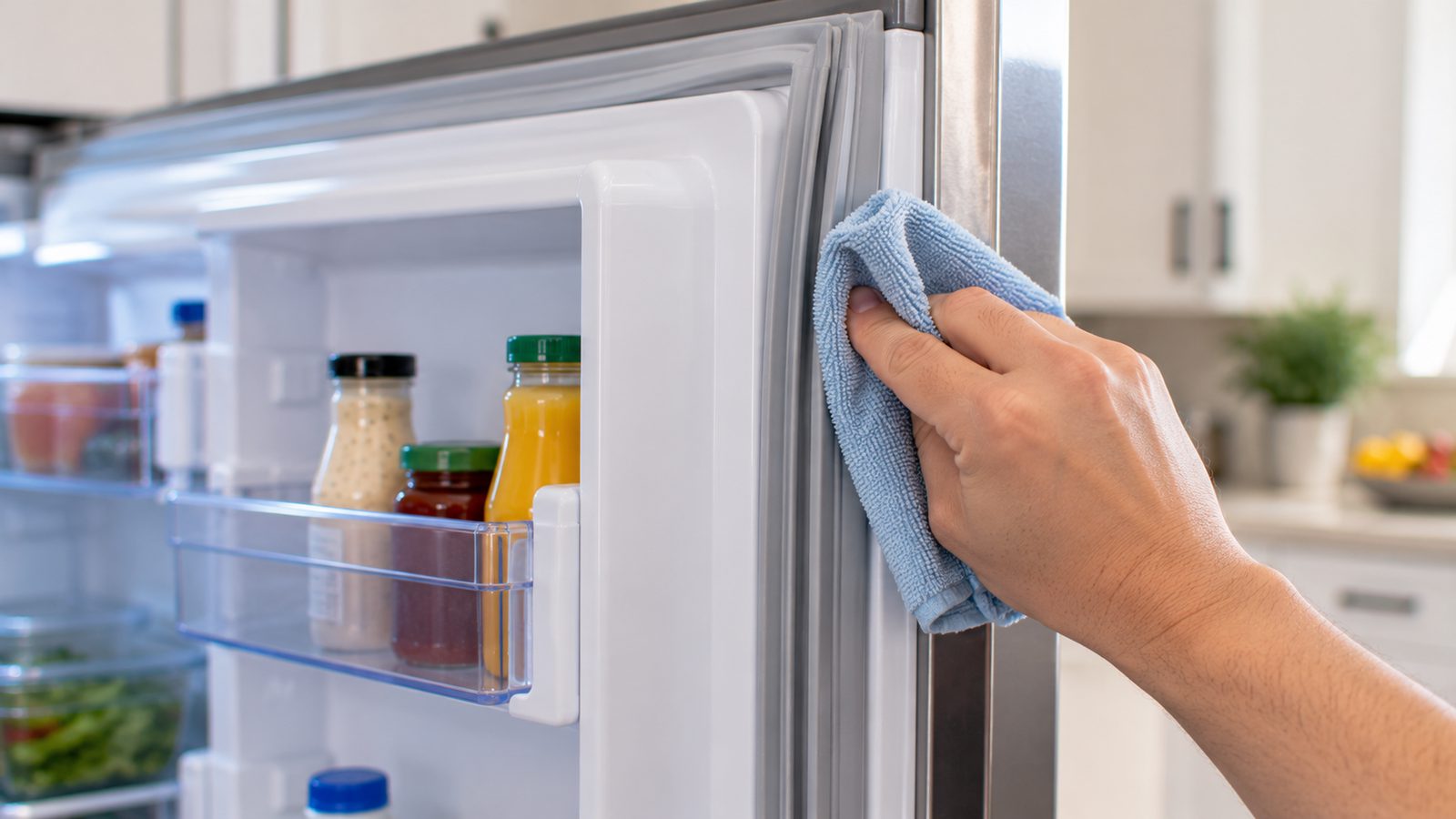
Wipe accessible gasket surfaces with a soft, damp cloth, then dry them.
Inspect the gasket for tears, distortion, or visible gaps.
Keep food and liquids covered.
Condensation is different from a continuing supply-water leak. If puddles return despite a properly closing door, another source needs investigation.
6. A Drain-Pan or Installation Problem
Some water in the defrost collection pan is normal: the pan receives defrost water, which should gradually evaporate. A damaged pan, water missing the pan, or an overflow condition can cause a leak beneath the appliance.
Incorrect installation may also affect door closure or drainage. Leveling requirements vary by model, so do not assume every refrigerator should sit perfectly level in all directions.
What you can do: Consult the installation instructions. Inspect or clean the pan only if the manual identifies it as user-accessible. Do not reach around the compressor, remove a fixed pan, or adjust a heavy refrigerator without appropriate help.
What If the Refrigerator Is Also Not Cooling?
A leak combined with rising temperatures needs prompt attention. Check the actual temperature with an appliance thermometer rather than relying on the interior light or display alone.
Keep refrigerated food at 40°F (4°C) or below. If the refrigerator cannot maintain that temperature, move perishable food to another working refrigerator or a properly chilled cooler.
For related symptoms, see Refrigerator Not Cooling? 7 Common Causes & What to Do.
When to Call a Refrigerator Repair Technician
Arrange service when water keeps returning, ice repeatedly forms on the freezer floor, the filter housing is damaged, or the suspected leak is behind a panel. A leak near electrical components also requires safe isolation before inspection.
When requesting refrigerator repair, provide the brand, model number, leak location, and when you first noticed it. Mention any recent filter replacement, installation, or change in cooling performance. Photos of the visible water can help explain the symptoms.
Frequently Asked Questions
Can a refrigerator leak without a water line?
Yes. Automatic defrosting produces water even in refrigerators without a dispenser or ice maker. Drainage problems, condensation, or spilled liquids can still cause water to collect.
Does water under the drawers always mean a clogged drain?
No. Depending on the model, the source may be a drain problem, an internal water reservoir, a filter connection, or a spill. The location alone does not identify the failed part.
Will unplugging my refrigerator stop the leak?
Not necessarily. A connected water line can remain pressurized after power is disconnected, and melting ice may continue to release water. A suspected supply leak requires shutting off the water when it is safe to do so.
Can I keep using the water dispenser while the refrigerator leaks?
Avoid using the dispenser and ice maker until the source is identified. If the water system is leaking, shut off its supply when safely accessible and arrange the appropriate repair.
Schedule Refrigerator Leak Repair
APA Appliance Repair provides in-home refrigerator repair throughout Marin County and selected East Bay communities. We do not currently service San Francisco city or Peninsula addresses.
Call (415) 237-9464 or use the online service request form. Include your complete address, refrigerator brand, model number if available, and a description of where and when the water appears. Appointments are available Monday through Saturday, from 9:00 AM to 5:00 PM. Contact us to confirm availability for your address and preferred visit time.