
Dishwasher Not Draining? Common Causes and What to Check
Opening the dishwasher after a completed cycle and finding standing water at the bottom is frustrating. It may also leave dishes dirty, create an unpleasant odor, or cause water to leak onto the kitchen floor.
A dishwasher that will not drain does not always need a new drain pump. The problem may be as simple as an interrupted cycle, clogged filter, blocked drain hose, or recently installed garbage disposal. In other cases, the dishwasher may have a failed pump, damaged check valve, faulty sensor, or electrical problem.
This guide explains what homeowners can safely check and when it is time to request professional dishwasher repair.
APA Appliance Repair provides independent in-home service throughout Marin County and selected East Bay communities. We do not service San Francisco city or Peninsula communities.
Is a Small Amount of Water in the Dishwasher Normal?
A small amount of clean water may remain below the filter or inside the sump area after a cycle. This water helps keep seals from drying out and may not indicate a problem.
A drainage problem is more likely when:
water is visibly covering the bottom of the tub;
dirty water remains after every cycle;
the dishwasher stops before completing the drain stage;
dishes remain wet or covered with residue;
the machine produces an unusual humming or grinding sound;
water returns after the dishwasher has drained;
the dishwasher displays a drainage-related error code;
water leaks onto the floor or under the cabinets.
If the water is dirty, has a strong odor, or continues to rise, avoid running additional cycles until the cause has been identified.
1. Make Sure the Cycle Was Completed
Before inspecting any components, confirm that the wash cycle actually finished.
A dishwasher may retain water when:
the door was opened during operation;
power was interrupted;
the cycle was manually canceled;
the door latch did not close correctly;
the control panel stopped responding;
the dishwasher detected an error and ended the cycle early.
Close the door securely and use the appliance’s normal cancel or drain function. The exact button combination varies by brand and model, so consult the owner’s manual if necessary.
If the dishwasher drains after the cancel command, the earlier cycle may simply have been interrupted. If it repeatedly stops before draining, the machine may have a door-latch, sensor, control, or electrical problem.
2. Check and Clean the Dishwasher Filter
A clogged filter is one of the most common causes of poor dishwasher drainage.
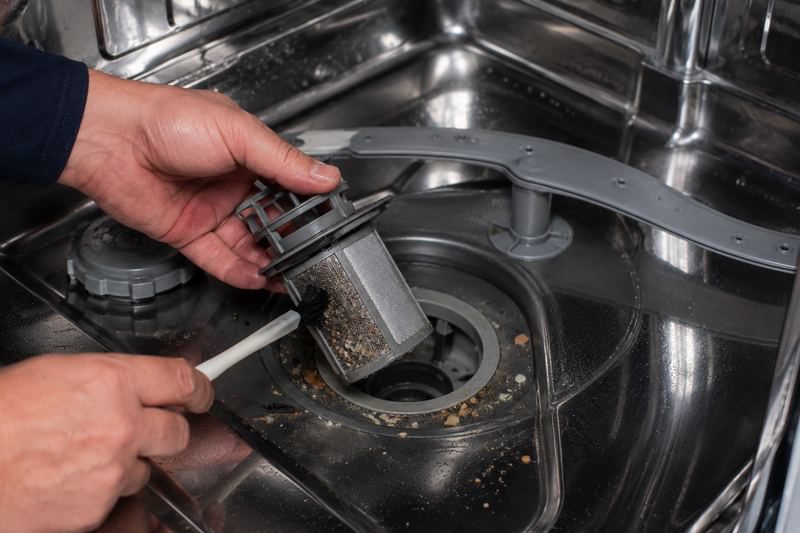
Food particles, paper labels, broken glass, grease, and detergent residue can collect around the filter and restrict water flow. The filter is usually located at the bottom of the tub beneath the lower spray arm.
Before removing it:
Turn the dishwasher off.
Disconnect power at the breaker if you will place your hands near the sump or pump area.
Remove the lower rack.
Follow the manufacturer’s instructions for unlocking the filter.
Check for sharp glass before reaching into the area.
Rinse the filter under warm water and clean it with a soft brush. Do not use a metal brush or sharp tool that could damage the filter mesh.
After reinstalling the filter, make sure it is properly locked in place. An incorrectly installed filter can allow debris to enter the circulation or drain system.
3. Inspect the Area Around the Drain
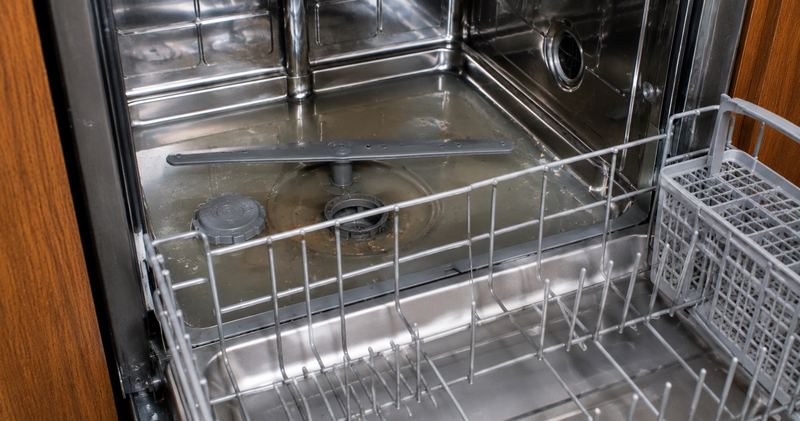
Once the filter is removed, look for visible debris around the drain opening.
Common obstructions include:
pieces of broken glass;
food fragments;
fruit pits;
paper labels;
small pieces of plastic;
bones or hard shells;
detergent buildup.
Do not push objects deeper into the drain opening. Never place your fingers into an area you cannot clearly see, as broken glass may be hidden under the water.
If the obstruction is below a pump cover or requires appliance disassembly, stop and request service. Pump covers and fasteners differ between models, and incorrect removal can damage seals or wiring.
4. Check the Garbage Disposal Connection
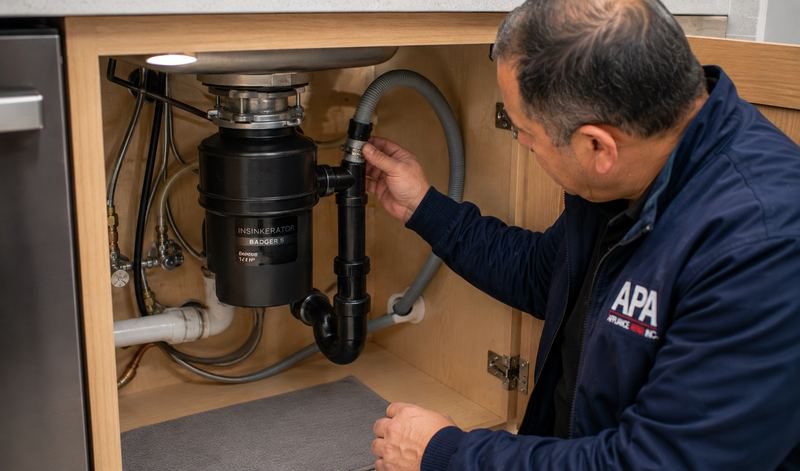
Many dishwashers drain through a hose connected to the kitchen garbage disposal.
If the disposal was recently installed or replaced, the dishwasher inlet may still contain its factory knockout plug. When this plug is not removed, water cannot enter the disposal and remains inside the dishwasher.
Other disposal-related problems include:
food buildup near the dishwasher inlet;
a loose or kinked drain hose;
a blocked connection fitting;
a disposal that is already full or not draining properly.
Run the garbage disposal briefly with cold water if it is safe and operating normally. If water backs up into the sink or the disposal does not drain, the plumbing problem may need to be corrected before the dishwasher can drain properly.
Do not place chemical drain cleaner inside the dishwasher or disposal connection. Drain chemicals can damage dishwasher components and create a hazard for anyone opening the drain system later.
5. Inspect the Air Gap
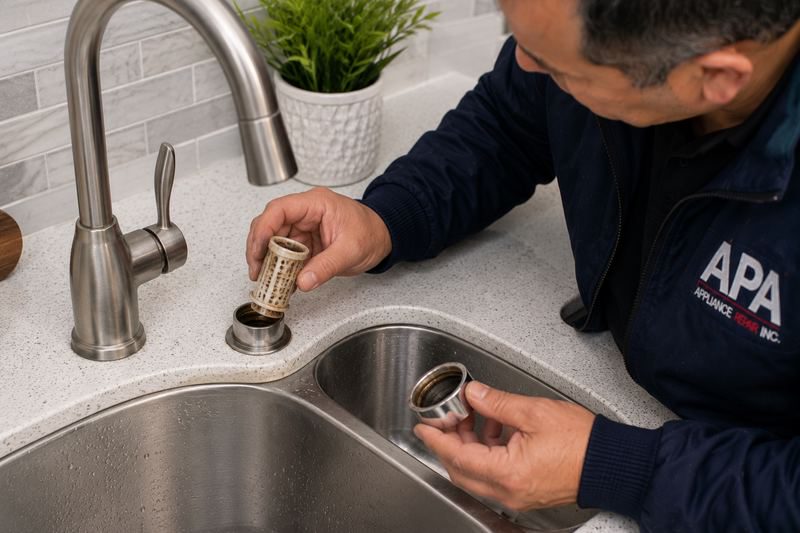
Some dishwasher installations use a small air-gap fitting mounted beside the kitchen faucet. Its purpose is to help prevent contaminated sink water from flowing backward into the dishwasher.
An air gap may become clogged with food particles or grease. Possible signs include:
water coming out of the air-gap cap;
slow dishwasher drainage;
water remaining in the tub;
drainage problems that appear when the sink is also in use.
Remove only the outer cover if it is designed to lift off, then check for visible debris. Do not force the fitting apart or disconnect plumbing if you are unsure how it is assembled.
If water continues to escape from the air gap after visible debris is removed, the drain hose or downstream plumbing may still be restricted.
6. Check the Dishwasher Drain Hose
The drain hose carries water from the dishwasher to the garbage disposal, sink drain, or air gap.
Drainage can be restricted when the hose is:
kinked behind the dishwasher;
crushed between the appliance and cabinet;
clogged with grease or food;
installed without the required high loop;
sagging in a way that allows dirty water to return;
incorrectly connected after recent plumbing work.
Inspect only the visible portion of the hose under the sink. Do not pull a built-in dishwasher out of the cabinet unless you have the proper tools and understand how its water, electrical, and mounting connections are installed.
A damaged hose should be replaced rather than temporarily patched.
7. The Drain Pump May Be Blocked
The drain pump uses a small impeller to push water out of the dishwasher. Broken glass, labels, food particles, or other debris can prevent the impeller from turning.
A blocked pump may produce:
humming without drainage;
clicking or grinding sounds;
intermittent draining;
an error code;
water remaining after the pump attempts to start.
The pump area may contain sharp debris and electrical components. Turn off power before any inspection and avoid removing the pump unless you have model-specific service information.
A technician can test whether the impeller is obstructed, whether the pump receives the correct voltage, and whether the pump motor has failed.
8. The Drain Pump May Have Failed
If the drain path is clear but the dishwasher still does not remove water, the drain pump itself may be defective.
A failed pump may:
remain completely silent during the drain stage;
hum without moving water;
operate only intermittently;
leak around its housing or seal;
show incorrect electrical resistance;
receive power but fail to turn.
A drainage error code does not automatically prove that the pump needs replacement. The same code may be caused by a blockage, wiring problem, sensor, control board, or restricted hose.
Testing should be completed before ordering a model-specific pump.
9. A Check Valve May Be Allowing Water to Return
Some dishwashers use a check valve to prevent drained water from flowing back into the tub.
When the valve is damaged, blocked, or stuck open, the dishwasher may drain normally but develop standing water again several minutes later.
This can also happen when:
the sink drain is restricted;
the drain hose is installed incorrectly;
the garbage disposal connection is blocked;
wastewater backs up from the plumbing system.
If the dishwasher becomes empty and then refills with dirty water, the problem may involve backflow rather than pump failure.
10. The Door Latch, Sensor, or Control May Be Interrupting the Cycle
Modern dishwashers monitor the door position, water level, temperature, pump operation, and cycle timing.
The dishwasher may stop before draining if it detects a problem with:
the door latch or door switch;
a water-level or pressure sensor;
electrical wiring;
the control board;
the user-interface panel;
a leak-detection system;
another component earlier in the wash cycle.
Record the complete error code before turning the appliance off. An error code helps identify the affected system, but it does not always identify the exact part that needs replacement.
What Can You Safely Check Yourself?
Homeowners can usually perform the following checks:
confirm that the cycle completed;
run the normal cancel or drain command;
clean the removable dishwasher filter;
remove clearly visible debris;
inspect the visible drain hose for kinks;
check the garbage disposal connection;
inspect the removable air-gap cover;
record any error codes;
check whether the sink and disposal drain normally.
Stop troubleshooting and request professional help if:
electrical components must be tested;
the dishwasher must be removed from the cabinet;
the pump requires disassembly;
wiring appears burned or damaged;
water is leaking near electrical connections;
glass or sharp debris is trapped inside the pump;
the dishwasher repeatedly trips the circuit breaker.
Should You Use Chemical Drain Cleaner?
No. Chemical sink and pipe cleaners should not be poured into a dishwasher.
These products may:
damage seals, hoses, pumps, and metal components;
react with detergent or standing water;
create dangerous fumes;
remain inside the appliance;
injure the person who later opens the drain system.
A mechanical blockage should be located and removed safely.
Can You Keep Using a Dishwasher That Will Not Drain?
Continuing to run the dishwasher is not recommended when water remains in the tub.
Repeated operation may:
cause water to leak under the cabinets;
create unpleasant odors;
allow bacteria and residue to accumulate;
overload or damage the drain pump;
return dirty water to clean dishes;
worsen an existing electrical or mechanical problem.
Turn the appliance off if you see leaking water, smell overheated wiring, hear grinding, or notice the circuit breaker tripping.
Is a Dishwasher Worth Repairing?
The decision depends on:
the age of the dishwasher;
its overall condition;
the cause of the drainage failure;
part availability;
previous repair history;
installation and replacement costs.
A clogged hose, filter, valve, latch, or replaceable drain pump is often repairable. Replacement may make more sense when the tub is damaged, several major systems are failing, or the required parts are no longer available.
A proper diagnosis should come before the decision. Standing water alone does not mean the entire dishwasher needs to be replaced.
Dishwasher Brands We Repair
APA Appliance Repair works on many common residential dishwasher brands, including:
Service availability may depend on the model, installation, required parts, and ZIP code. APA Appliance Repair is an independent repair company and is not automatically affiliated with or authorized by these manufacturers.
Dishwasher Repair in Marin County and East Bay
APA Appliance Repair provides in-home dishwasher service throughout Marin County and selected East Bay communities.
Visit our Service Areas page to confirm coverage for your city and ZIP code. We do not service San Francisco city or Peninsula communities.
When requesting service, include:
your ZIP code;
dishwasher brand;
model number if available;
complete error code;
whether water remains in the tub;
whether the drain pump makes any sound;
whether the sink or garbage disposal drains normally.
This information helps us understand the problem and prepare for the appointment.
Related Appliance Repair Guides
You may also find these guides helpful:
Washer Not Draining? Common Causes and When to Call for Repair
Dryer Not Heating? Common Reasons Your Dryer Runs but Won’t Heat
Need Dishwasher Repair?
If your dishwasher has standing water, drains slowly, leaks, displays an error code, or stops before completing the cycle, APA Appliance Repair can diagnose the problem in your home.
Schedule dishwasher repair online or call (415) 237-9464.
We serve Marin County and selected East Bay cities. Appointment availability depends on your ZIP code, technician route, appliance model, and required parts.