
Dryer Not Heating? 6 Common Reasons Your Dryer Runs but Won’t Heat
A dryer that turns on and tumbles normally but produces little or no heat can leave clothing damp after several cycles. The problem may be caused by an incorrect setting, restricted airflow, an electrical supply issue, a failed heating component, or a gas-ignition fault.
Some causes can be checked without opening the appliance. Others require electrical measurements, access to high-voltage components, or work around a gas system and should be handled by an experienced technician.
This guide explains six common reasons a dryer may run without heating, what homeowners can safely inspect, and when to request professional dryer repair.
APA Appliance Repair provides independent in-home appliance service throughout Marin County and selected East Bay communities. We do not service San Francisco city or Peninsula communities.
1. The Wrong Dryer Setting Is Selected
Before assuming that a part has failed, check the selected cycle and temperature.
Many modern dryers include settings that intentionally use little or no heat, including:
Air Dry;
Air Fluff;
No Heat;
Delicate;
Eco;
Wrinkle Release;
timed cool-down stages;
moisture-sensor cycles.
A moisture-sensor cycle may also reduce heat or end early when the dryer incorrectly detects that clothing is already dry. This can happen when the load is very small, contains mixed fabric types, or does not make consistent contact with the moisture sensors.
Try a timed drying cycle with a normal or high-temperature setting. Place several damp cotton items in the drum and let the dryer run for a few minutes.
If the dryer begins producing heat, the earlier behavior may have been related to the selected cycle rather than a failed component.
If every heat setting produces only cold air, further diagnosis is needed.
2. Restricted Airflow or a Clogged Dryer Vent
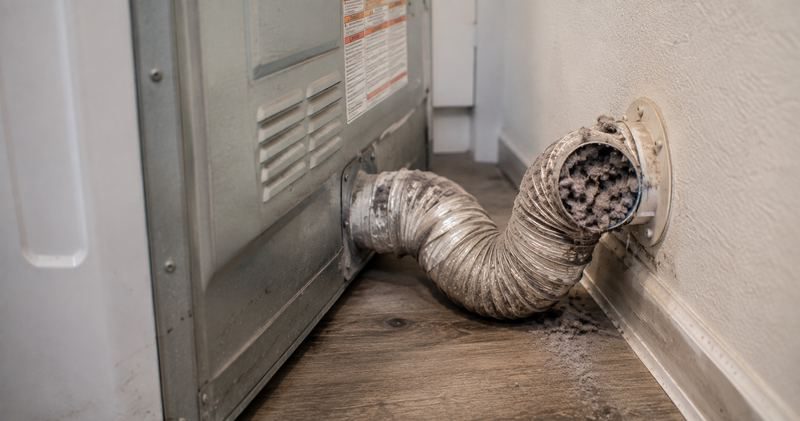
A dryer needs steady airflow to remove heat and moisture from the drum. When the airflow is restricted, clothing takes longer to dry and the appliance may overheat.
A safety thermostat or thermal device may interrupt the heating circuit when temperatures become excessive. The dryer may continue tumbling while producing little or no heat.
Common airflow restrictions include:
a lint screen covered with lint;
fabric-softener residue blocking the filter mesh;
a crushed exhaust hose;
a hose pushed tightly against the wall;
lint buildup inside the vent;
a blocked exterior vent hood;
a stuck exterior damper;
an exhaust duct that is too long or contains too many bends.
Clean the lint screen before every load. If the filter looks clean but water remains on its surface instead of passing through the mesh, wash it with warm water and a soft brush to remove residue.
While the dryer is running, check whether air exits normally from the exterior vent. Weak airflow may indicate a restriction between the appliance and the outside of the home.
Do not continue using a dryer that becomes unusually hot, smells scorched, or repeatedly shuts down. Excessive lint and restricted airflow can create a fire hazard and damage heating components.
Professional dryer repair and complete dryer-vent cleaning are different services. A technician can determine whether the heating problem is inside the appliance or caused by the home’s exhaust system.
3. The Electric Dryer Is Not Receiving Full Voltage
An electric dryer normally requires a 240-volt supply. Its motor and controls may operate on part of that supply while the heating element requires the full voltage.
This means an electric dryer can:
turn on;
illuminate the control panel;
rotate the drum;
complete a cycle;
while still producing no heat because one side of the electrical supply has been interrupted.
Check the electrical panel for a double-pole dryer breaker. A breaker may appear to be on even when one side has tripped.
Turn the breaker completely off and then back on once. If it immediately trips again, stop using the dryer and do not continue resetting it. Repeated tripping may indicate a wiring problem, damaged heating component, short circuit, or another electrical fault.
Also inspect the power cord and outlet without removing covers. Stop using the appliance if you notice:
burned or melted plastic;
discoloration around the outlet;
a loose power plug;
a damaged power cord;
a burning smell;
sparks or unusual electrical sounds.
Outlet voltage, terminal-block connections, and internal wiring should be tested by a qualified professional.
4. A Thermal Fuse, Cutoff, or Thermostat Has Opened
Dryers contain temperature-control and safety components designed to prevent overheating.
Depending on the model, these may include:
a thermal fuse;
thermal cutoff;
cycling thermostat;
high-limit thermostat;
exhaust temperature sensor;
thermistor.
A failed or open thermal component may stop the heating circuit. On some models, a blown thermal fuse prevents the dryer from starting at all. On others, the drum may continue turning while the heat remains off.
A thermal device usually fails for a reason. Possible causes include:
restricted venting;
lint buildup;
a blocked blower housing;
a failed heating element;
incorrect thermostat operation;
damaged wiring;
poor airflow around the dryer.
Replacing the thermal component without finding the cause may result in another failure.
These components must be tested with the dryer disconnected from power. Their locations and specifications vary by model, so diagnosis should follow the appliance wiring diagram and service information.
5. The Heating Element Has Failed
Electric dryers use a resistance heating element to warm the air entering the drum.
Over time, the heating coil may:
burn open;
break from repeated heating and cooling;
short against its metal housing;
develop a damaged terminal;
overheat because of restricted airflow.
When the element burns open, the dryer may tumble normally but produce no heat.
A damaged element can also create other symptoms:
heating only intermittently;
overheating;
producing a metallic or burning smell;
tripping the circuit breaker;
heating even when the cycle should be cooling down.
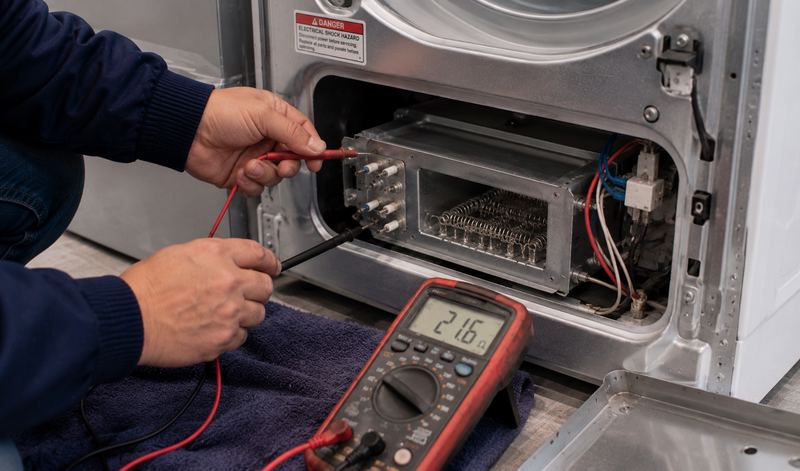
The heating element should be tested for continuity and checked for a short to its housing. The dryer must be disconnected from power before the service panel is opened.
Do not replace the element based only on the symptom. A voltage problem, thermal cutoff, thermostat, wiring connection, relay, or control board may produce similar behavior.
6. The Gas Ignition System Is Not Working
A gas dryer uses an electric ignition system to light the burner.
Depending on the model, the system may include:
an igniter;
flame sensor;
gas-valve coils;
burner assembly;
temperature sensors;
safety thermostats;
electronic controls.
A gas dryer may tumble without heating when the igniter does not glow, the burner does not light, or the gas valves stop opening after the appliance warms up.
Common symptoms include:
the dryer starts but never heats;
the igniter glows but no flame appears;
the burner lights briefly and then shuts off;
heat works at the beginning of a cycle but stops later;
repeated clicking occurs without ignition;
drying time becomes much longer than normal.
Gas-valve coils can fail intermittently. The burner may operate when the dryer is cold and then stop after the components become warm.
Do not open gas fittings or attempt to bypass ignition or safety components.
If you smell natural gas:
Do not operate switches, appliances, phones, matches, or anything that may create a spark.
Leave the building immediately.
Call 911 from a safe location.
Contact PG&E at
1-800-743-5000.Schedule appliance service only after the area has been declared safe.
Other Possible Causes of a Dryer Not Heating
The six causes above are among the most common, but a dryer may also stop heating because of:
damaged internal wiring;
a loose terminal-block connection;
a failed motor switch;
a defective temperature sensor;
a moisture-sensor problem;
a failed heating relay;
a damaged control board;
an incorrectly installed power cord;
a blocked blower wheel;
an incomplete gas supply.
Electronic control boards should not be replaced solely because the dryer does not heat. Power supply, airflow, sensors, wiring, thermostats, and heating components should be tested first.
Why Does the Dryer Heat but Take Too Long to Dry?
A dryer that produces some heat but needs several cycles may have a different problem from a dryer that produces no heat at all.
Long drying times are commonly caused by:
restricted exhaust airflow;
an overloaded drum;
clothing that is too wet after the washer cycle;
a partially failed heating element;
intermittent gas-valve coils;
an inaccurate temperature sensor;
a damaged drum seal;
automatic-cycle sensor problems.
Check whether the washer is completing its spin cycle. Clothing that enters the dryer unusually wet may indicate a washer drainage or spin problem rather than a dryer failure. See our guide: Washer Not Draining? Common Causes and When to Call for Repair.
Why Does the Dryer Stop Heating After a Few Minutes?
A dryer that heats normally at first and then begins blowing cold air may have:
restricted venting;
overheating protection activating;
failing gas-valve coils;
a temperature sensor problem;
a loose electrical connection;
a heating relay that fails when warm;
an element with an intermittent break.
Note when the heat stops and whether it returns after the dryer cools down. This information can help the technician reproduce the problem.
What Can You Safely Check Yourself?
Homeowners can usually perform the following checks without opening the dryer:
confirm that a heated cycle is selected;
clean the lint screen;
check the visible exhaust hose for crushing or kinks;
inspect the exterior vent for airflow;
reduce an overloaded dryer load;
check the electric dryer’s double-pole breaker once;
confirm that the gas shutoff valve has not been accidentally closed;
record error codes;
note whether heat appears briefly and then stops;
inspect the power cord and outlet for visible damage.
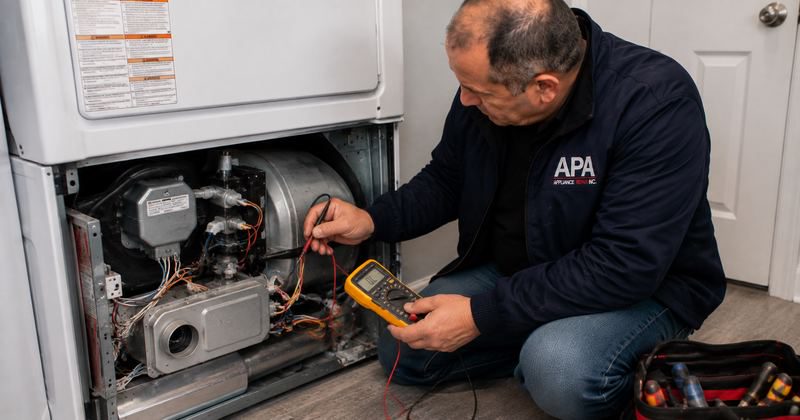
Do not remove service panels unless the appliance is disconnected from power and you understand the model-specific procedure.
Professional diagnosis is recommended when testing requires access to:
the heating element;
thermal fuse or thermostats;
high-voltage terminals;
internal wiring;
gas-valve components;
burner assembly;
control board;
motor switch.
Can You Keep Using a Dryer That Does Not Heat?
Running repeated cycles is not recommended until the cause is understood.
Continued operation may:
waste electricity or gas;
overheat the appliance;
damage clothing;
worsen a vent restriction;
place additional stress on the motor;
cause a weak electrical connection to overheat;
lead to another thermal-device failure.
Stop using the dryer immediately if:
you smell gas;
the breaker repeatedly trips;
the power cord or outlet becomes hot;
you smell burned wiring;
the dryer produces smoke;
the cabinet becomes unusually hot;
you hear scraping, grinding, or electrical arcing.
Is a Dryer Worth Repairing?
The decision depends on:
the dryer’s age;
overall mechanical condition;
cause of the failure;
required parts;
repair history;
condition of the drum and cabinet;
replacement and installation cost.
A heating element, thermostat, thermal cutoff, igniter, or gas-valve coil is often replaceable. Replacement may make more sense when the dryer has multiple major failures, severe cabinet damage, unavailable parts, or a repair cost approaching the price of a suitable replacement.
A correct diagnosis should come before the decision. A dryer that runs without heat does not automatically need to be replaced.
Dryer Brands We Repair
APA Appliance Repair services many common residential dryer brands, including:
Service availability depends on the model, installation, required part, and customer ZIP code.
APA Appliance Repair is an independent appliance repair company and is not automatically affiliated with or authorized by these manufacturers.
Dryer Repair in Marin County and East Bay
APA Appliance Repair provides in-home dryer service throughout Marin County and selected East Bay communities.
Visit our Service Areas page to confirm coverage for your city and ZIP code. We do not service San Francisco city or Peninsula communities.
When requesting service, provide:
your ZIP code;
dryer brand;
model number if available;
whether the dryer is gas or electric;
whether the drum turns;
whether the dryer produces any heat;
whether heat stops after several minutes;
any displayed error code;
information about unusual smells or sounds.
Related Appliance Repair Guides
Need Dryer Repair?
If your dryer runs but does not heat, takes too long to dry clothing, shuts down, or produces an error code, APA Appliance Repair can diagnose the problem in your home.
Schedule dryer repair online or call (415) 237-9464.
We serve Marin County and selected East Bay cities. Appointment availability depends on the ZIP code, technician route, appliance model, and required parts.