
Washer Not Draining? Common Causes and When to Call for Repair
Opening the washer and finding clothes sitting in water is frustrating, but it does not always mean the appliance needs to be replaced. A washer may stop draining because of a selected cycle, a restricted drain hose, a clogged pump filter, a failed drain pump, or a problem with the door or lid lock.
Some basic checks can be performed safely at home. Other causes require access to electrical components or the internal drain system and should be handled by a qualified technician. If your washer still contains water after the cycle has ended, APA Appliance Repair provides professional washer repair throughout Marin County and selected East Bay communities. You can confirm availability for your location on our service area page.
Why Is There Water Left in the Washer?
A small amount of water below the inner basket, inside the pump housing, or around the door gasket can be normal. However, visible standing water in the drum after a completed cycle usually indicates that the washer did not drain properly.
The problem may involve the washer itself, but it can also be caused by a blocked household drain or standpipe. Paying attention to when the problem occurs and what sounds the washer makes can help narrow down the cause.
If the washer hums but no water leaves the drum, the pump may be obstructed or unable to move water through the drain hose. If the washer remains completely silent when it should be draining, the problem may involve the pump, lid lock, wiring, water-level sensor, or electronic control.
1. The Cycle Was Paused or Interrupted
Before assuming that a component has failed, check the selected cycle and the washer’s display.
Delicate, soak, rinse-hold, and similar settings may intentionally leave water in the drum until another command is selected. A power interruption, unbalanced load, activated child lock, or accidentally paused cycle can also prevent the washer from completing its drain and spin sequence.
Try the following:
Confirm that the cycle has actually finished.
Check the display for an error code.
Make sure the door or lid is fully closed.
Select the manufacturer’s Drain, Spin, or Drain & Spin setting.
Redistribute a heavy or unbalanced load.
If the washer repeatedly stops at the same point, record the error code and avoid restarting it over and over. Repeated attempts can place additional strain on a blocked or failing drain pump.
2. The Drain Hose Is Kinked or Clogged
The drain hose carries water from the washer to the home’s standpipe, utility sink, or drain connection. If the hose is pinched behind the appliance, sharply bent, frozen, or clogged with debris, water may drain slowly or remain inside the drum.
Turn off and unplug the washer before inspecting the hose. If the machine needs to be moved, close the hot and cold water supply valves first and take care not to damage the flooring or supply connections.
The drain hose should also be installed according to the washer manufacturer’s instructions. A hose positioned too high can make it difficult for the pump to discharge water. A hose pushed too deeply into a standpipe or sealed without an air gap may cause siphoning or drainage problems.
Do not cut, extend, or reposition the hose without checking the installation requirements for your specific model.
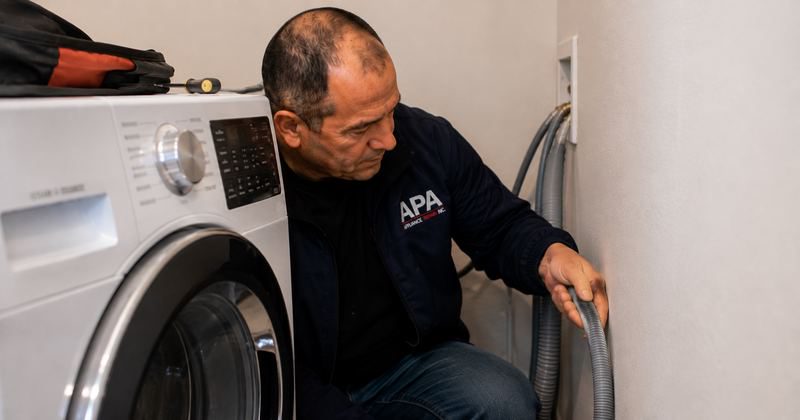
3. The Household Drain or Standpipe Is Blocked
Sometimes the washer is working correctly, but the home’s drain cannot accept the discharged water.
Watch the standpipe or utility sink while the washer attempts to drain. If water rises in the standpipe, backs up into the sink, or spills onto the floor, the household plumbing may be restricted.
A plumbing blockage should be addressed before the washer is used again. Do not pour chemical drain cleaner into the washing machine, drain hose, or pump filter. These products may damage appliance components and can create a chemical exposure hazard for anyone servicing the machine.
If the washer pumps water out normally but the standpipe overflows, a plumber may be the appropriate professional to contact.
4. The Drain Pump Filter Is Clogged
Many front-load washers have a user-accessible drain pump filter, sometimes called a coin trap. It can collect lint, coins, hairpins, small socks, pet hair, and other debris that passed through the drum.
A restricted filter may cause:
Slow draining
Standing water in the drum
Longer-than-normal cycles
A humming or rattling sound
A drain-related error code
Wet clothes at the end of the cycle
Only clean the filter if the owner’s manual identifies it as a user-serviceable component. Not every washer has an externally accessible filter.
Before opening it, unplug the washer and allow hot wash water to cool. Place towels and a shallow container below the access area. If the washer has an emergency drain tube, use it according to the manufacturer’s instructions. Loosen the filter gradually because a substantial amount of water may be released.
After removing visible debris, inspect the filter seal and reinstall the filter securely. A filter that is cross-threaded or not fully tightened can leak during the next cycle.
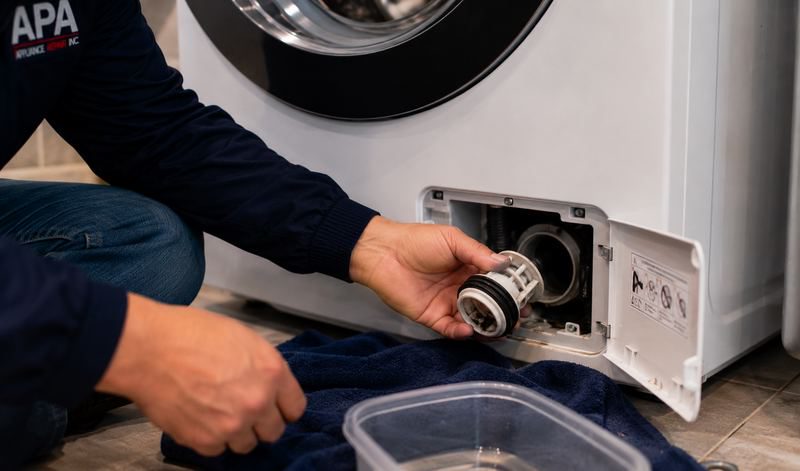
5. An Object Is Blocking the Drain Pump
Small objects can pass beyond the filter and become lodged in the pump impeller or internal drain hose. Common obstructions include coins, buttons, bra wires, hairpins, fabric, and fragments of damaged clothing.
A blocked pump may hum because its motor is receiving power but the impeller cannot turn. You may also hear grinding, clicking, or rattling during the drain portion of the cycle.
Do not reach into the pump housing, remove the washer cabinet, or attempt to rotate internal components while the appliance is connected to power. If the obstruction is not visible in a user-accessible filter area, professional diagnosis is the safer option.
6. The Drain Pump Has Failed
The drain pump may fail electrically or mechanically. Its motor can burn out, the impeller can break, or the internal bearings can seize.
Possible signs of a failed pump include:
The washer does not make any pumping sound.
The pump hums but cannot move water.
Draining becomes progressively slower.
The washer stops and displays a drain error.
The pump makes a loud grinding or rattling noise.
Water leaks from the pump area.
A technician can determine whether the pump is receiving the correct voltage, whether the drain path is clear, and whether the pump can create adequate water flow. This prevents replacing a pump when the actual problem is a clogged hose, damaged wire, or control issue.
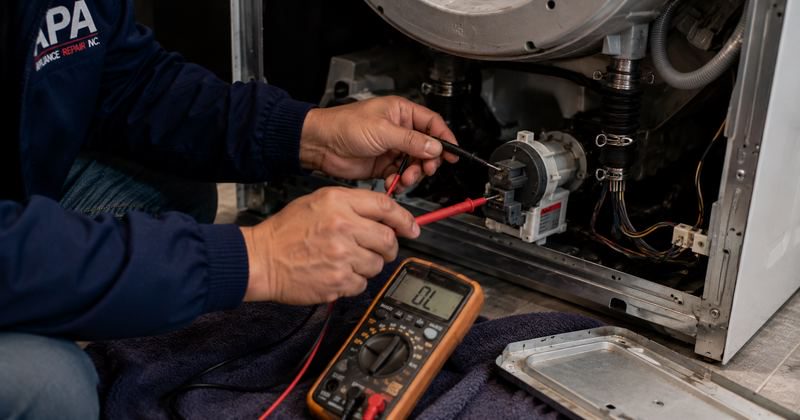
7. The Door Lock or Lid Switch Is Not Working
Washers use a safety switch or locking mechanism to confirm that the door or lid is closed. Depending on the model, a defective lock can prevent the washer from advancing to the drain or spin stage.
Common symptoms include:
The door or lid does not lock.
The lock clicks repeatedly.
The washer stops before draining or spinning.
A door, lid, or lock error appears.
The washer drains but will not begin the final spin.
The door remains locked because water is still detected inside.
Never force open a locked washer door. On a front-load washer, the door normally remains locked while the control detects water in the drum. Forcing it can damage the latch and release water onto the floor.
8. The Washer Is Not Spinning
A washer that does not spin and a washer that does not drain are related problems, but they are not always the same issue.
If the water leaves the drum but the clothes remain very wet, the problem is more likely connected to the spin cycle. An unbalanced load, defective lid lock, worn drive components, motor problem, or control fault may prevent the washer from reaching full spin speed.
If water remains visibly inside the drum, begin by investigating the drain system. Accurately describing whether the machine drains, spins, or does neither will help the technician diagnose the problem more efficiently.
9. The Water-Level Sensor, Wiring, or Control Has a Problem
The washer relies on a water-level or pressure-sensing system to determine whether water remains in the tub. If the pressure hose, sensor, wiring, or electronic control fails, the machine may receive incorrect information about the water level.
These problems can produce inconsistent symptoms. The washer may stop mid-cycle, continue running the pump, refuse to spin, display an error code, or leave the door locked.
Testing these components can require electrical measurements and access to internal parts. The washer should remain unplugged until it can be inspected by a qualified appliance technician.
What Can You Safely Check at Home?
Before scheduling a repair, you can perform several non-invasive checks:
Confirm that the washer has completed its cycle.
Look for an error code and consult the owner’s manual.
Select Drain or Drain & Spin once.
Redistribute an unbalanced load.
Inspect the visible portion of the drain hose for kinks.
Check whether the standpipe or utility sink is backing up.
Clean the pump filter only if the manual describes the procedure.
Confirm that the door or lid closes normally.
Stop using the washer if you notice a burning smell, smoke, sparking, repeated breaker trips, a significant leak, or harsh mechanical noises.
How to Drain a Washer Safely
Standing water can be heavy, hot, and difficult to control. Before attempting to drain the machine:
Turn the washer off and unplug it.
Close both water supply valves if the machine is leaking or must be moved.
Allow hot water to cool.
Protect the floor with towels and a shallow container.
Follow the manufacturer’s emergency-drain instructions.
Release water slowly through the emergency tube or user-accessible filter.
Keep children and pets away from the work area.
Do not tilt a washer filled with water. Do not open the cabinet, disconnect internal hoses, or work on electrical components yourself.
If the machine has no accessible emergency drain or the amount of water cannot be controlled safely, contact a technician.
When Should You Call for Washer Repair?
Professional diagnosis is recommended when:
The drain problem returns after the filter is cleaned.
The washer hums, grinds, or clicks without draining.
The pump does not appear to run.
The door remains locked with water inside.
The drain hose is clear, but water remains in the drum.
A drain, pump, door-lock, or water-level error keeps returning.
Water is leaking underneath the washer.
Internal components must be accessed.
The washer trips a breaker or produces a burning smell.
APA Appliance Repair can inspect the drain hose, pump filter, internal hoses, drain pump, door or lid lock, sensors, wiring, and electronic controls. Once the source of the problem has been identified, we can explain the available repair options before the work proceeds.
Schedule washer service or call (415) 237-9464 to request an appointment.
Is a Washer That Will Not Drain Worth Repairing?
In many cases, yes. A clogged drain path, damaged hose, failed pump, or defective door lock can often be repaired without replacing the entire washer.
The decision depends on:
The washer’s age and overall condition
The cause of the drainage problem
The cost and availability of replacement parts
Previous repairs
Rust, bearing wear, or other existing damage
The cost of a comparable replacement appliance
A proper diagnosis is important because similar symptoms can have very different causes. Replacing the drain pump will not correct a blocked household drain, damaged wire, or faulty control board.
Washer Brands We Service
APA Appliance Repair works on many major washer brands, including Samsung, LG, GE, Whirlpool, Maytag, Frigidaire, Bosch, and KitchenAid.
Service availability can depend on the washer model, age, required part, and type of problem. Provide the model number and a description of the symptoms when scheduling whenever possible.
Washer Repair in Marin County and the East Bay
We provide washer repair throughout Marin County and selected East Bay communities. Visit our service area page to see the current list of cities we serve.
If your city is listed and the washer is not draining, explain whether the pump makes noise, whether an error code appears, and whether the standpipe backs up. This information can make the initial diagnosis more efficient.
Frequently Asked Questions
Why is my washer humming but not draining?
A humming sound often means the drain pump is receiving power but cannot turn or move water. The pump filter, drain hose, internal hose, or pump impeller may be obstructed. A mechanically damaged pump can produce the same symptom.
Can I put drain cleaner in my washing machine?
No. Chemical drain cleaners can damage the washer’s hoses, seals, and pump components. They may also expose the person servicing the appliance to hazardous chemicals. A blocked household drain should be inspected separately.
Why does my washer drain but not spin?
If the water leaves the drum but the clothes remain wet, the problem may involve an unbalanced load, door or lid lock, drive system, motor, or electronic control rather than the drain pump.
Will unplugging the washer fix a drain problem?
Disconnecting power may clear a temporary control error, but it will not remove a clogged filter, straighten a restricted hose, or repair a failed component. If the problem returns, the washer should be diagnosed.
Can I open a front-load washer when it contains water?
Do not force the door open. Front-load washers normally keep the door locked while water is detected inside. Follow the manufacturer’s emergency-drain instructions or request professional service.
Schedule Washer Repair
If your washing machine will not drain, avoid running repeated cycles and do not attempt to open internal components. APA Appliance Repair can diagnose the drainage system and determine whether the problem involves a blockage, pump, lock, sensor, wiring, or control.
Schedule a washer repair appointment or call (415) 237-9464.
You can also read our guides about a dishwasher that is not draining and a dryer that runs but does not heat.